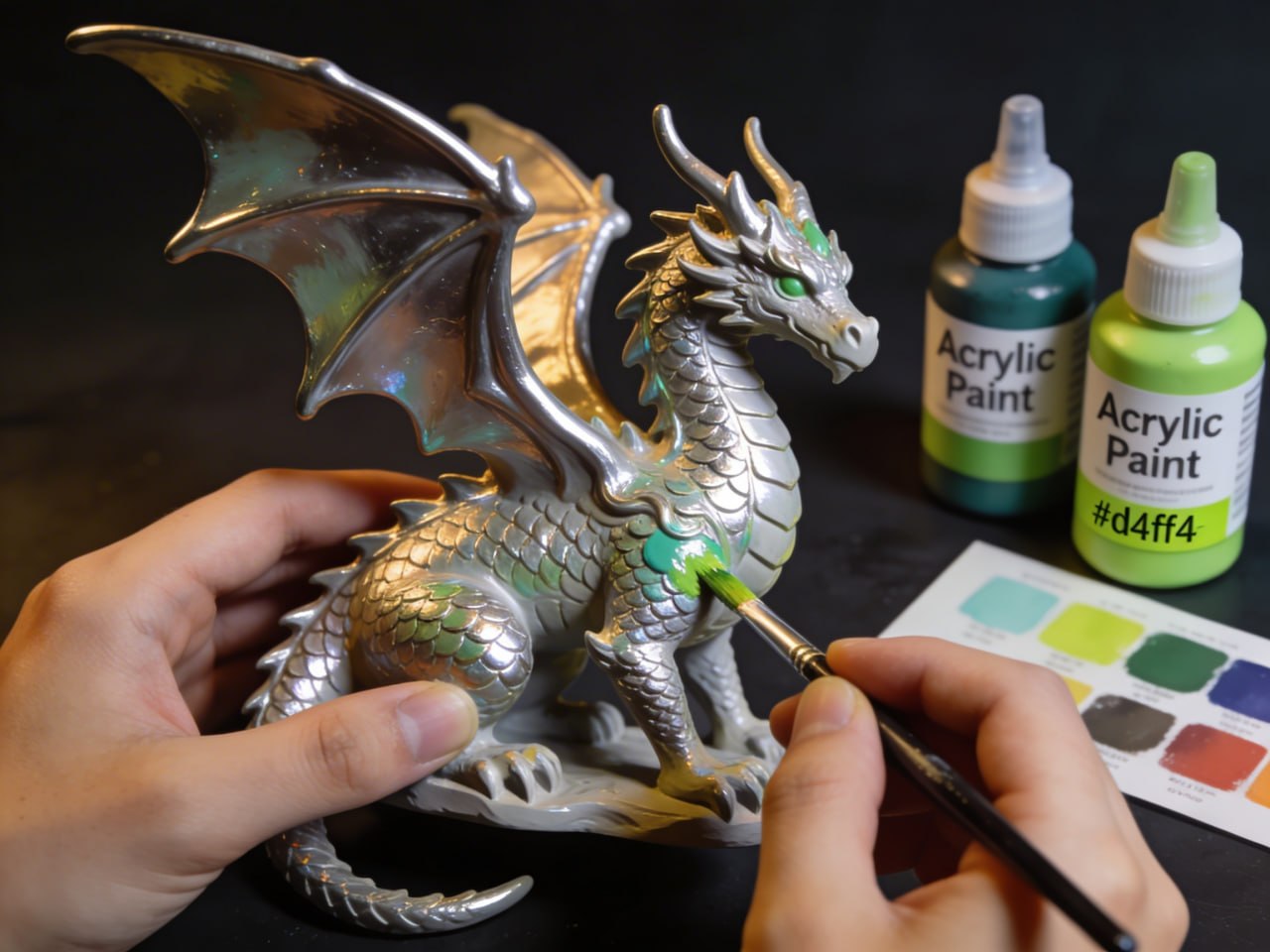
Why Paint Your 3D Prints?
A raw 3D print looks like a prototype. A painted one looks like a product. Whether you're selling models on platforms like Cults3D or creating cosplay props, painting transforms your prints from plastic to professional.
Step 1: Preparation
Before any paint touches your model, preparation is everything. Start by removing support marks with a hobby knife or sandpaper (220 grit). For FDM prints, layer lines are your enemy — sand progressively from 200 to 600 grit until smooth.
Pro tip: Warm water and dish soap remove dust and oils from handling. Let it dry completely before priming.
Step 2: Priming
Never skip priming. A good primer (like Rust-Oleum 2X or Tamiya Surface Primer) does three things: fills minor imperfections, provides tooth for paint adhesion, and reveals flaws you missed during sanding.
Apply 2-3 light coats. Heavy coats = drips and lost detail. For our cat masks and cosplay accessories, we use gray primer as it works with both light and dark final colors.
Step 3: Painting Techniques
Spray Paint (Easiest)
Best for: single-color items, large surfaces, quick results. Hold 20-30cm away, use sweeping motions. 3-4 light coats beat 1 heavy coat every time.
Acrylic Brush Painting
Best for: details, multi-color designs, small models. Use Citadel, Vallejo, or Apple Barrel acrylics. Thin your paints — consistency of milk is perfect. Two thin coats cover better than one thick coat.
Airbrush (Professional)
Best for: gradients, smooth finishes, production work. Investment ~$50-150 for a starter kit. Worth it if you paint regularly.
Step 4: Clear Coat & Protection
Seal your work with a clear coat — matte, satin, or gloss depending on the look you want. This protects against chips, UV fading, and handling wear. For pet accessories like our 3D printed cat masks, a durable clear coat is essential.
Common Mistakes to Avoid
- Painting too thick — obscures detail and causes drips
- Skipping primer — paint peels within days
- Not sanding — layer lines show through paint
- Rushing between coats — let each coat dry fully (30-60 min)
- Using wrong paint — enamel melts some plastics; stick to acrylics for PLA
Best Paints for 3D Prints
Budget: Apple Barrel acrylics ($2-3 per bottle) — surprisingly good for the price.
Mid-range: Vallejo Model Color ($4-6) — excellent coverage, huge color range.
Premium: Citadel/Games Workshop ($7-9) — designed for miniatures, perfect for small detailed prints.
Final Thoughts
Painting 3D prints is a skill that improves with practice. Start with simple single-color projects and work your way up to complex paint schemes. Browse our 3D model store for print-ready designs perfect for your first painting project.


Ready to Start Printing?
Browse our collection of 3D printable models — from flexi toys to cat masks.
Visit Our Store →